The DfE Technology in Schools Survey 2024–2025: From Data to Effective Monitoring Strategies
Explore key findings from the DfE Technology in Schools Survey 2024-2025 and how Fastvue helps UK schools improve filtering systems, monitoring provision and online safety.
 Simon May
The DfE Technology in Schools Survey 2024 -2025 has just been released, providing an updated national picture of how UK schools are using digital tools across teaching, safeguarding, and technical operations. It covers everything from device access and connectivity to filtering systems, effective monitoring strategies, cybersecurity standards, staff confidence, online safety practices, and how young people navigate the online world on both school and college devices.
The survey is designed to help the DfE to understand 'how best to support schools to embed and use technology in ways that support cost savings, workload efficiencies and improved pupil outcomes'.
For schools, the survey also offers valuable insights into where filtering and monitoring systems are working well, where safeguarding and technical concerns persist, and how different phases are adapting to modern threats, harmful content, and emerging behaviours. It also highlights how senior leadership teams, IT staff, and designated safeguarding leads are balancing strategic responsibility with the practical realities of keeping students safe online through effective safeguarding policies.
Strategic Planning and Decision Making
What the report says (TiSS Chapter 2)
School leadership teams continue to shape digital strategy, but the survey shows uneven maturity in the processes that support this work. While awareness of the DfE digital and technology standards is rising, many schools do not have clear frameworks for planning, reviewing or governing their technology choices. The report highlights that evaluation is often informal, and leaders frequently lack structured methods for assessing whether their digital tools are delivering the outcomes they expect across teaching, administration and operational activity.
Key TiSS stat:
- Only 35 per cent of leaders report having a mechanism to measure the effectiveness of the technology they use.
How Fastvue supports
Fastvue gives leadership teams a clearer view of how their digital environment is functioning. Instead of relying on informal feedback or scattered data, schools gain consistent evidence that supports strategic planning and technology evaluation. Fastvue shows how digital tools are being used across the network and provides insight that helps leaders assess whether their current approach supports teaching, administration and online activity in line with their expectations.
This means:
- More structured and reliable evaluation of technology performance
- Clearer governance discussions about digital strategy
- Stronger alignment with the DfE digital and technology standards
- More confident planning decisions for future infrastructure and investment
Devices and Usage Levels
What the report says (TiSS Chapter 3)
Device access has expanded significantly across both primary and secondary settings, with pupils now moving between school and college devices and their own personal devices throughout the day. This shift shapes how they navigate the online environment and increases pressure on filtering systems and monitoring provision to keep online safety consistent across a mixed estate.
Key TiSS stats:
- Assistive technology availability almost doubled in primaries (34% to 60%) and increased in secondaries (40% to 59%).
- Laptops are now available in 90% of primaries and 94% of secondaries.
How Fastvue supports
Fastvue provides consistent monitoring across all specific devices by analysing activity at the firewall layer, without relying on device agents or management software. This helps schools maintain strong filtering and monitoring even when pupils switch devices throughout the day.
Quality and Impact of Technology
What the report says (TiSS Chapter 4)
Technology is reducing educators' and IT teams' workloads, but only when systems behave reliably. The survey shows that effective monitoring and filtering systems directly shape how staff perceive the usefulness of digital tools for online safety in safeguarding and teaching.
Key TiSS stats:
- 61% of leaders say technology has reduced workload.
- Teachers who believe devices are fit for purpose are significantly more positive about their impact on teaching and online safety.
How Fastvue supports
Fastvue removes noise and ambiguity by presenting online activity clearly and contextually. DSLs and pastoral teams get timelines and behaviour patterns they can act on immediately, without relying on IT teams to translate raw logs. This strengthens online safety practice and reduces investigation time.
Meeting Digital and Technology Standards
What the report says (TiSS Chapter 5)
More schools are meeting the DfE's digital and technology standards, but overall numbers still remain low. These standards emphasise governance, filtering and monitoring systems, and demonstrating that online safety controls are adequate. Perhaps more importantly, meeting these standards helps schools remain proactive in addressing online safety and cyber threats.
Key TiSS stats:
- The number of primaries meeting all digital standards increased from 12% to 21%.
- Secondary schools increased from 9% to 18%.
How Fastvue supports
Fastvue helps schools produce the monitoring evidence required for online safety reviews, governance meetings, and inspections. Its reports align with filtering and monitoring standards and give DSLs clear documentation that supports safeguarding audits and data protection impact assessments.
Safety and Cyber Security standards
What the report says (TiSS Chapter 6)
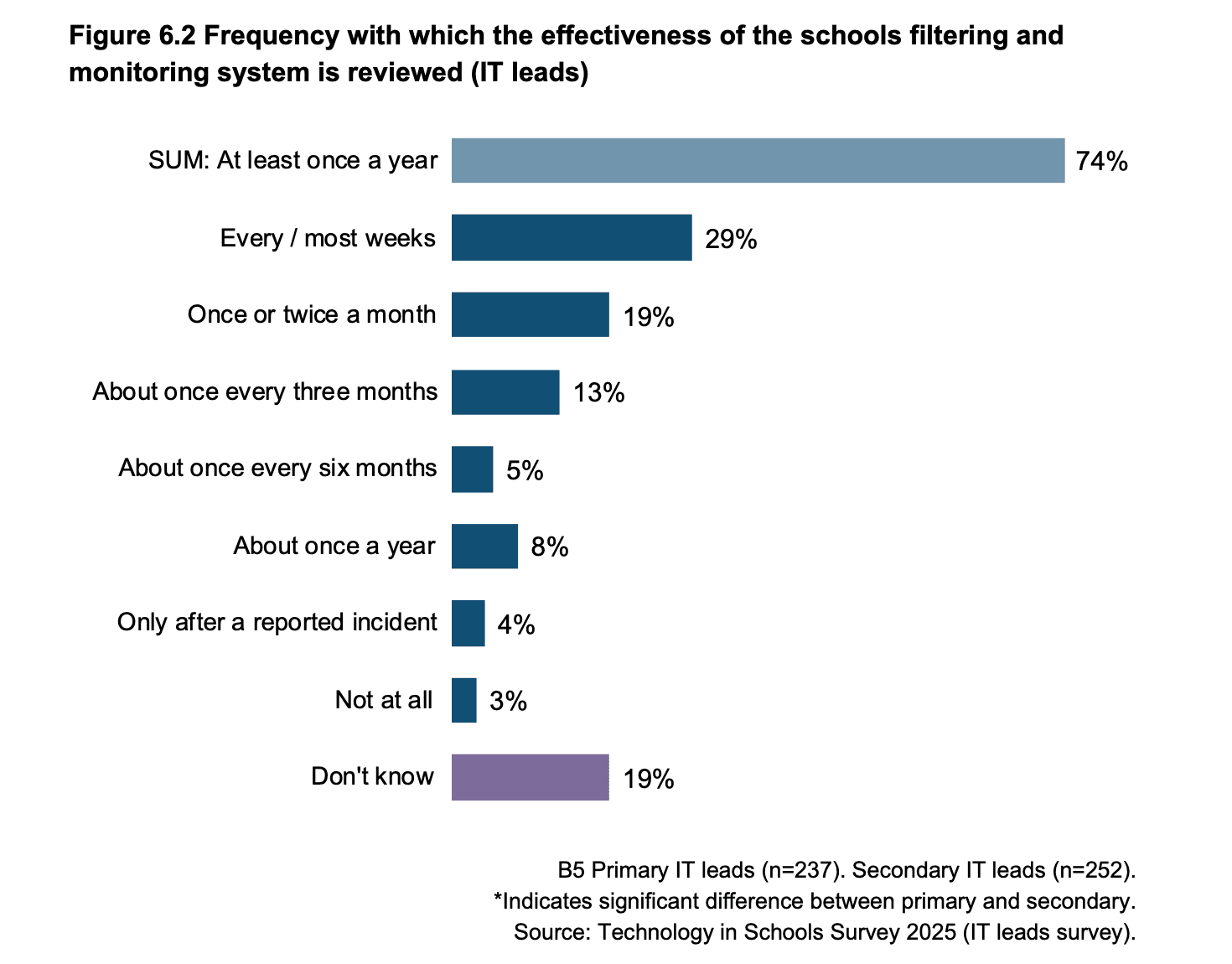
Most UK schools report having some sort of online monitoring strategy, but confidence in filtering and monitoring systems varies widely. Some review their filtering and monitoring provision regularly, while others only review their effectiveness only after an incident. Waiting until a web filter fails to undertake a review of your filtering and monitoring systems significantly affects your school's ability to identify online harm, particularly for vulnerable student groups.
Key TiSS stats:
- 39% of primary schools now have a formal cybersecurity policy (up from 28 per cent).
- 91% of primaries and 95% of secondaries report having a device-use monitoring strategy.
Despite this, many schools still feel unsure whether filtering and monitoring systems are configured effectively, leaving gaps in online safety visibility.
How Fastvue supports
Fastvue strengthens cybersecurity standards by highlighting real-time behaviour patterns rather than isolated alerts. Schools gain immediate visibility of harmful sites, unusual activity, and escalating online behaviour. Instead of waiting for annual reviews, Fastvue gives DSLs and IT teams continuous insight that supports ongoing student protection, safer decision-making, and more reliable filtering and monitoring outcomes.
This supports:
- Earlier detection of online harms and emerging threats
- Clearer oversight of how filtering systems are performing
- More proactive cybersecurity responses
- Stronger confidence across safeguarding and IT roles
If your Fastvue Reporter server stops communicating with our licensing server, our global support team will reach out after 7 days and help you get back up and running. This supports stronger monitoring protocols and ensures your school continues to meet cybersecurity standards.
Pastoral and Safeguarding Support
What the report says (TiSS Chapter 7)
Technology now plays an increasing role in safeguarding students. The survey shows that teachers and pastoral teams are increasingly using digital tools to track pupil support, liaise with external agencies, and identify wellbeing concerns earlier.
Key TiSS stats:
- Safeguarding technology use in primary schools increased from 92 per cent to 98 per cent.
- Tracking of pastoral support rose from 67 per cent to 83 per cent.
These changes reflect the reality that well-being signals often appear first in the online environment — and schools need monitoring systems that surface these signals clearly.
Fastvue provides pastoral and safeguarding teams with clean, contextual insight into online behaviour. It surfaces repeat searches, escalation patterns and early indicators that keyword-based filtering systems often miss. With Fastvue Reporter's custom-designed safeguarding report, staff spend less time interpreting noise and more time supporting pupils who need early intervention. This report serves as an excellent conversation starter, inviting DSLs and pastoral staff to collaboratively discuss and assess current strategies. By fostering dialogue, the report promotes shared ownership of safeguarding measures, ensuring that all team members are aligned in their approach to supporting student safety and well-being.
This supports:
- Better coordination between DSLs, pastoral teams, and external agencies
- Earlier identification of wellbeing and safeguarding concerns
- Clearer, more contextual evidence for intervention
- A safer environment across all school devices
Fastvue Reporter for Education: Turning data into a more robust framework for filtering systems and monitoring provision
The DfE's latest technology in schools survey paints a clear picture. While progress is being made across UK education settings, safeguarding and technical concerns still persist across phases. Mixed estates, increasing online activity, and emerging threats, such as harmful content, mean schools need clearer visibility and stronger monitoring protocols.
Fastvue Reporter for Education strengthens filtering and monitoring provision by turning your firewall data into clear contextual safeguarding insights. It helps digital safeguarding leads and leadership teams identify harmful online content, understand behavioural patterns, and meet cybersecurity standards with confidence.
As a strategic partner, Fastvue supports schools in building a more robust framework for their online safety protocols, one that reduces workload, improves online safety, and aligns with KCSiE and the DfE's digital and technology expectations. Maybe it's time to ask yourself what would proactive online safety look like in your school next term?